Best Casino Games by House Edge: Strategic Selection Guide (2026)
Discover which casino games offer the lowest house edge and highest return-to-player percentages. Learn strategic game selection techniques to maximize your winning potential at the casino.
The House Edge Is the Only Number That Matters
If you are walking into a casino without knowing the house edge of every game you plan to play, you are not gambling. You are donating. The house edge is not a suggestion. It is a mathematical certainty, a built-in structural advantage that determines exactly what percentage of every dollar you wager will eventually return to the casino over time. Players who treat casino games as entertainment might ignore this number. Players who treat casino games as a mathematical exercise know that house edge is the foundation of every strategic decision at the table.
Your goal is not to beat the house edge. That is impossible over a large sample size. Your goal is to minimize it, to find the games where the structural disadvantage is smallest, and to play those games with optimal strategy while managing your bankroll intelligently. This guide ranks the major casino games by house edge, explains why the numbers matter, and provides a framework for selecting games that give you the best chance of preserving your bankroll and maximizing your expected value. Everything below is mathematics, not mythology. Trust the numbers.
What the House Edge Actually Means for Your Bankroll
The house edge is expressed as a percentage and represents the average amount of each bet that the casino expects to retain over an infinite number of hands or spins. If a game has a house edge of 5 percent, the casino expects to keep 5 cents of every dollar you wager on that game over a sufficiently large sample. This does not mean you will lose exactly 5 percent of every session. Variance means short-term results swing wildly around the mathematical expectation. You might win big in a single session or lose everything quickly on a cold streak. But over thousands of bets, your actual results will converge toward the theoretical house edge.
Understanding this convergence is critical for setting realistic expectations. A player who wagers $10,000 on blackjack at 0.5 percent house edge can expect to lose approximately $50 over that volume. The same $10,000 wagered on keno at 25 percent house edge can expect to lose $2,500. The difference is not luck. The difference is game selection. Every dollar you choose to wager on a game with a higher house edge is a dollar you are mathematically choosing to lose faster. There are no exceptions to this rule. There are only informed players and uninformed players.
The house edge also determines the breakeven point for promotional offers, match plays, and comps. A $5 match play on a game with a 1 percent house edge has much more value than the same match play on a game with a 10 percent house edge. Every strategic decision in the casino should start with understanding the house edge of the game you are about to play.
The Best Casino Games by House Edge: Ranked from Lowest to Highest
Blackjack played with perfect basic strategy carries the lowest house edge of any table game in the casino, typically ranging from 0.28 to 0.5 percent depending on the specific rules offered at the table. The exact rules that affect house edge include the number of decks in play, whether the dealer hits or stands on soft 17, whether doubling down is allowed after splitting, and whether surrender is available. Single deck blackjack with favorable rules can dip as low as 0.28 percent. Eight deck blackjack with unfavorable rules can climb above 0.6 percent. The critical variable is whether you actually play with perfect basic strategy. Every departure from optimal play increases the house edge, sometimes dramatically. A player who guesses at decisions instead of following basic strategy can push the house edge above 2 percent without realizing it.
Baccarat ranks second among table games, with the banker bet carrying a house edge of approximately 1.06 percent after accounting for the commission charged on winning banker bets. The player bet comes in at 1.24 percent. The tie bet is a mathematical disaster at 14.36 percent and should never be touched by players seeking to minimize expected loss. Baccarat is appealing because the decision is simple. You pick banker or player, and the hand plays out. There is no strategy to learn beyond avoiding the tie. The house edge on banker is nearly as low as blackjack, and there is no decision point after the initial bet where you can make a costly mistake through incorrect play.
Craps offers several betting options with dramatically different house edges. The pass line bet with odds carries a combined house edge below 0.5 percent when full odds are available. The do not pass bar is slightly lower but creates an uncomfortable social dynamic at most tables. The worst bets in craps are the proposition bets in the center of the layout, which carry house edges ranging from 5 percent to over 16 percent. The strategic discipline in craps is to stick to the line bets and take maximum odds. Every shiny proposition bet you add to your action increases your expected loss rate.
Video poker, particularly full-pay Jacks or Better, offers house edges that can dip below 0.5 percent when played with optimal strategy on a full-pay machine. The key variable is finding machines with favorable pay tables. The difference between a full-pay machine and a short-pay machine can be the difference between a 0.46 percent house edge and a 3 percent or higher edge. Full-pay Deuces Wild can actually yield a theoretical player edge of 0.76 percent with perfect play, though these machines are increasingly rare. Video poker requires study and practice to achieve optimal returns, but it represents one of the few legitimate paths to favorable expected value in the casino environment.
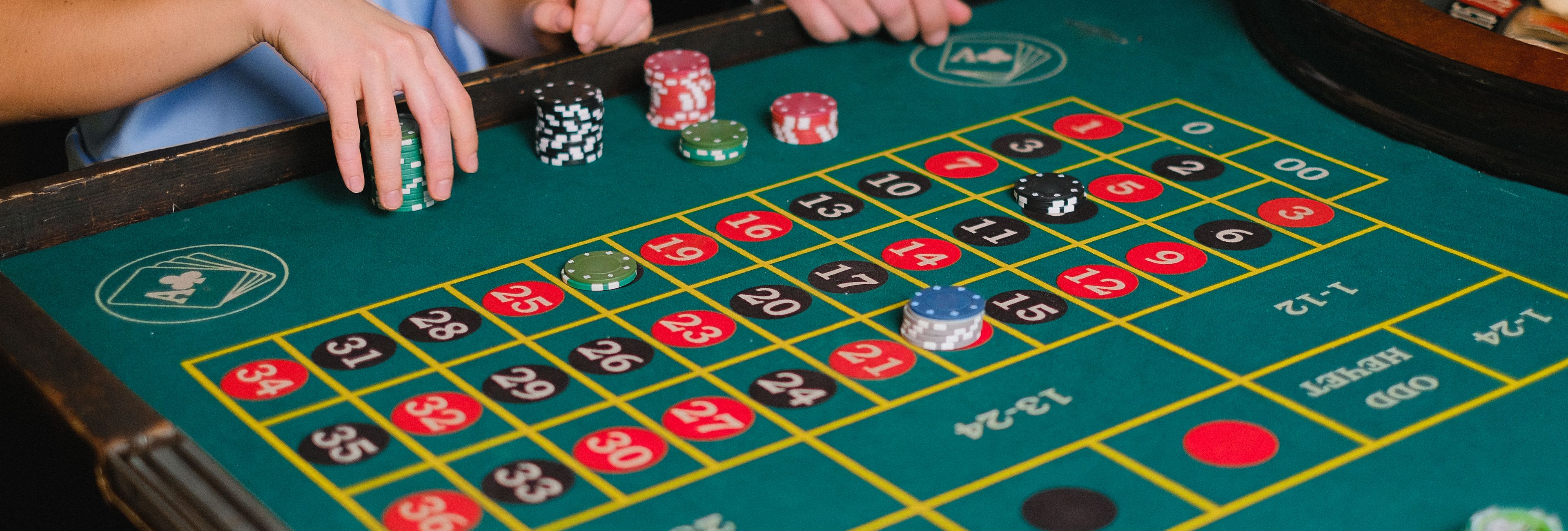
Roulette exists in two major variants with dramatically different house edges. The single zero European wheel carries a house edge of 2.7 percent. The double zero American wheel carries a house edge of 5.26 percent. If European roulette is available, the choice is obvious. The house edge on even money bets like red or black, odd or even, is exactly 2.7 percent on the European wheel and 5.26 percent on the American wheel. That single zero difference costs you almost double in expected losses per dollar wagered.
Games You Should Approach With Extreme Caution
Keno is one of the worst games by house edge in any casino, typically carrying a house edge between 20 and 35 percent depending on the specific game variant and paytable. The large jackpot prizes mask the brutal mathematics underneath. Every ticket you buy on keno is mathematically expected to return only 65 to 80 cents per dollar wagered over the long run. The allure of life-changing jackpots does not change the expected value calculation. You are paying a massive premium for the privilege of a small probability of a large win.
Slot machines represent the most popular casino game by volume, and the house edge varies enormously depending on the machine type and denomination. Penny slots can carry house edges of 10 to 15 percent or higher. High denomination dollar slots typically offer better odds, sometimes in the 2 to 5 percent range, though this is not guaranteed. The opacity of slot machine mathematics is intentional. Casinos are not required to disclose actual return percentages on individual machines in most jurisdictions. You are playing a game with an unknown mathematical structure, which makes strategic selection essentially impossible beyond choosing higher denomination machines and looking for machines with higher displayed payback percentages.
Three card poker, Caribbean stud, and other carnival table games typically carry house edges in the 3 to 5 percent range on the main bets. Side bets on these games, such as the progressive jackpot wagers, typically carry house edges above 20 percent. These games are not catastrophic if you stick to the main bets and play with reasonable discipline, but they offer no path to minimizing expected loss compared to blackjack, baccarat, or video poker. The house edge is simply higher, and there is no strategy that closes the gap.
Bankroll Protocol: Matching Your Game Selection to Your Session Bankroll
Knowing the house edge of your chosen game is only half the battle. You must also structure your bankroll to survive the variance that accompanies those expected losses over any meaningful sample of play. A game with a 0.5 percent house edge will theoretically drain your bankroll at half a percent per dollar wagered, but the variance in any single session can be enormous. A player with a $200 bankroll playing $10 hands of blackjack might go broke in an hour or might play for four hours. The expected loss is $1 per $200 wagered, but the distribution of outcomes around that expectation includes both winning and losing sessions that dwarf the theoretical edge.
The practical implication is that bankroll management and game selection must work together. If you are playing a game with higher variance like video poker or slots, you need a larger bankroll relative to your bet size to weather the swings. If you are playing a low variance game like blackjack or baccarat, you have more flexibility, but you still need sufficient capital to avoid going broke before the law of large numbers gives the house edge a chance to express itself.
A reasonable framework is to have at least 100 times your average bet available as session bankroll for games with moderate house edges and relatively low variance. For higher variance games, increase that multiple to 200 or 300 times your average bet. These are not guarantees against going broke. They are rough guidelines to give yourself a reasonable probability of completing a meaningful session without exhausting your bankroll.
Making the Final Selection: A Framework for Every Session
Before you sit down at any game, you should be able to answer three questions. What is the house edge on my primary bet? What is the minimum bet I can make at this table or machine? How long do I want to play, and what bankroll do I need to support that timeframe at this minimum bet with the variance inherent in this game? If you cannot answer these questions confidently, you have not done enough preparation before you started playing.
The optimal path for most recreational players is to seek out blackjack with favorable rules, learn basic strategy until it is reflexive, and bet amounts that allow for reasonable session length given your bankroll. If blackjack is not available or the rules are sufficiently poor to push the house edge above 1 percent, baccarat banker bets are the next best option. These two games give you the best combination of low house edge and manageable variance. Craps with odds is a viable alternative if you enjoy the social atmosphere and can discipline yourself to avoid the prop bets. Video poker on full-pay machines with expert strategy is the most skill-intensive option and offers the lowest potential house edge, but only if you dedicate the time to learning optimal play.
Never let the atmosphere, the comps, or the excitement override your mathematical reasoning. A game with a 3 percent house edge is always worse than a game with a 0.5 percent house edge, regardless of what the casino offers in complimentary drinks or hotel rooms. The expected loss on every dollar you wager is always the deciding factor. Everything else is noise.
The Discipline to Play the Right Games
Knowledge without discipline is useless. You can memorize every house edge in this guide, understand the mathematics completely, and still walk away a loser if you abandon your game selection when the table is hot or the atmosphere changes. The test of your strategic understanding is not whether you know which games have the lowest house edge. It is whether you will consistently choose those games over the temptation of faster action, bigger jackpots, or flashier products that carry dramatically worse mathematical expectations.
The casino floor is designed to confuse you. The best games are often in quiet areas. The worst games are usually in prominent locations with bright lights and active crowds. The house wants you on games with high house edges because those games generate more revenue per dollar wagered. Your job is to ignore the marketing and trust the mathematics. The house edge is not a suggestion. It is a guarantee. Play games where the guarantee works in your favor as much as the rules allow.